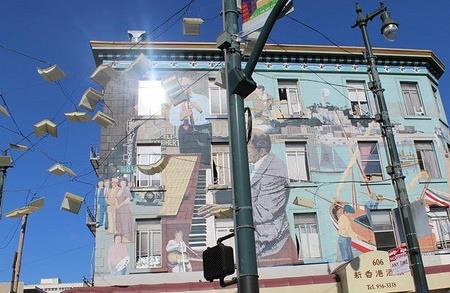
The Jazz Mural, a monumental work of public art, stands proudly in San Francisco's historic North Beach neighborhood, a vibrant testament to the city's rich cultural heritage and enduring love affair with jazz music. Created by Bay Area artist Bill Weber in 1987, and lovingly restored two decades later, the mural has become a beloved landmark, drawing visitors and locals alike to its colorful depiction of jazz legends and San Francisco icons. The mural's location at the intersection of Broadway and Columbus Avenue is particularly significant. This nexus marks the convergence of three distinct and historically important San Francisco neighborhoods: North Beach, renowned for its Beat Generation literary scene and Italian heritage; Chinatown, the oldest Chinatown in North America and a vibrant center of Chinese culture; and the Barbary Coast, a notorious district during the Gold Rush era, known for its saloons, gambling dens, and dance halls. The Jazz Mural itself is a sprawling composition, stretching three stories high and over 100 feet long. Weber's masterful brushstrokes bring to life a cast of characters that embody the spirit of San Francisco and the soul of jazz. Central to the mural are portraits of jazz giants such as Benny Goodman, the "King of Swing," his clarinet poised to unleash a flurry of notes; Teddy Wilson, his fingers dancing across the piano keys; and Gene Krupa, his drumsticks a blur of rhythmic energy. These figures, rendered with remarkable likeness and vitality, pay homage to the musicians who shaped the sound of jazz and left an indelible mark on American music. Beyond the jazz legends, the mural also incorporates a diverse array of San Francisco figures, both past and present. Herb Caen, the city's beloved columnist, known for his witty observations and encyclopedic knowledge of San Francisco life, is depicted alongside Emperor Norton, a colorful eccentric who declared himself "Emperor of the United States" in the 19th century and became a cherished figure in the city's folklore. A lineup of former San Francisco mayors, stretching back to Joseph Alioto, adds a touch of civic pride to the composition. Weber's decision to include these diverse figures reflects the mural's broader theme: the interconnectedness of music, culture, and community. The Jazz Mural is not simply a tribute to jazz; it is a celebration of San Francisco itself, its history, its people, and its unique spirit. Over the years, the Jazz Mural has become an integral part of the North Beach landscape, a visual landmark that embodies the neighborhood's artistic and cultural identity. It has been featured in countless photographs, films, and television shows, and has served as a backdrop for numerous community events and celebrations. In 2007, after two decades of exposure to the elements, the Jazz Mural underwent a meticulous restoration. Weber himself spearheaded the project, carefully cleaning, repairing, and repainting the mural to restore its original vibrancy. The restoration also provided an opportunity to update the mural, adding new figures such as Willie Brown, the former mayor of San Francisco, and Gavin Newsom, the current governor of California. These additions ensure that the Jazz Mural remains a living, breathing work of art, reflecting the ever-evolving character of the city it celebrates. Visiting the Jazz Mural is a must for anyone interested in art, music, or San Francisco history. Standing before this monumental artwork, one cannot help but be struck by its scale, its detail, and its sheer exuberance. The Jazz Mural is more than just a painting; it is a cultural landmark, a symbol of San Francisco's artistic spirit, and a testament to the enduring power of jazz music.
Greg